
Efficiently managing a high volume of WhatsApp chats is crucial for any growing business. To help your team stay organized and target the right customers, Interakt provides two powerful tools: Conversation Labels and Tags.
While they might seem similar, they serve very different purposes in your workflow. This article will guide you through how to use Labels to filter your inbox and clarify the key differences between Labels and Tags.
How to Use Conversation Labels in Your Inbox
Conversation Labels act as a visual shorthand for your team, identifying the context of a chat at a glance. Here is how to manage them:
1. Assigning a Label: Open any customer chat in the Shared Team Inbox. Just beneath the customer’s name, click the “Add label” call-out.
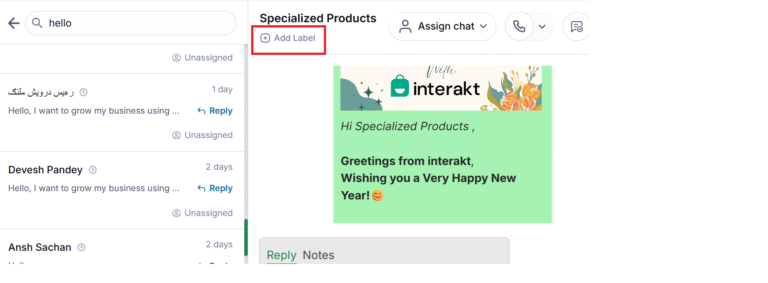
2. Creating New Labels: Type the desired name for your label. Keep in mind there is a 22-character limit, and special characters are not allowed. Once typed, click the “Create New” button.

3. Smart Suggestions: To keep things consistent across your team, previously created labels will appear in a dropdown menu as suggestions when you start typing.
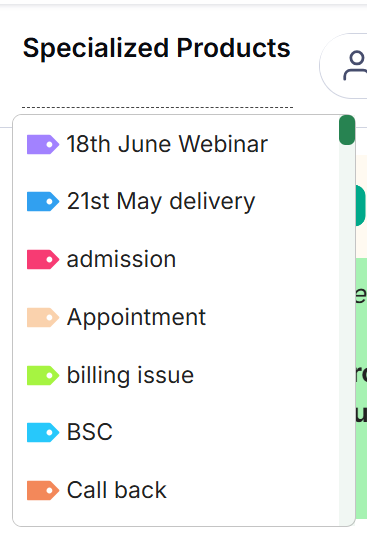
4. Visual Tracking: Once assigned, the label is visible in two places: beneath the username in the central chat window and in the chat list (loader section) on the left.
5. Removing or Updating: If you need to remove a label, simply click “Clear.” This restores the conversation to its original “zero state.”
Pro-Tip: While label colors are assigned randomly at first, that specific color stays consistent every time that label is used across your organization. While there is no limit to how many unique labels you can create, remember that only one label can be assigned per conversation at any given time.
How to Filter Chats in the Inbox Using Labels
As your conversation list grows, finding specific types of queries can become challenging. Conversation Labels allow your agents to categorize chats in real-time based on the context (e.g., “Refund,” “Technical Issue,” or “High Priority”).
To filter your inbox using these labels:
- Open your Interakt Shared Team Inbox.
- Locate the Filter Icon: At the top of your chat list, you will find the filter options.
- Select ‘Conversation Labels’: From the dropdown menu, choose the specific label you want to view and click on Apply Filter.
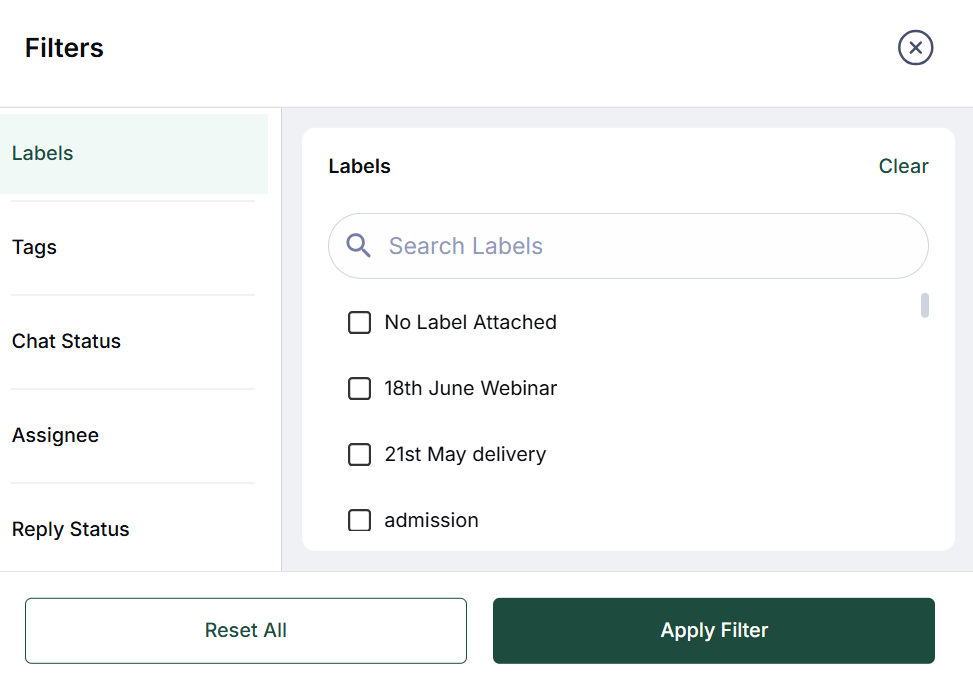
4. Instant Organization: The inbox will immediately refresh to show only the conversations marked with that specific label.
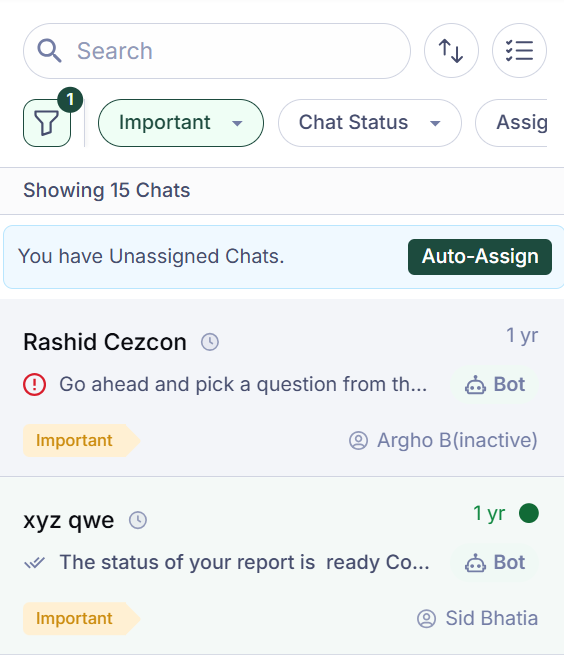
This ensures that your agents can focus on one category of queries at a time, drastically improving response speed and operational efficiency.
Conversation Labels vs. Tags: What’s the Difference?
Understanding the distinction between these two features is the secret to mastering Interakt’s CRM capabilities.
Feature | Conversation Labels | Tags |
Primary Purpose | Internal organization and chat management for agents. | Customer segmentation and marketing automation. |
Scope | Chat-specific: They describe what the current conversation is about. | Contact-specific: They describe who the customer is. |
Quantity Limit | Only 1 label can be assigned per conversation. | Multiple tags can be assigned to a single contact. |
Best Used For | Filtering the inbox to help agents find and resolve specific types of queries. | Building audience segments to send targeted marketing campaigns. |
1. Conversation Labels: For Chat Management
Labels are designed for the “here and now.” They help chat agents identify the status or topic of a current discussion. Because a conversation usually has one primary focus, Interakt allows only one label per conversation. If the context changes (e.g., a “Sales” inquiry turns into a “Support” ticket), you can simply update the label to reflect the current state.
2. Tags: For Audience Segmentation
Tags are long-term identifiers attached to the customer’s contact profile. Unlike labels, a customer can have many tags at once (e.g., “VIP,” “Frequent Buyer,” “Interested in Shoes”). These are essential for your marketing team; when you want to send a WhatsApp campaign, you use these tags to filter your list and ensure your message reaches the most relevant audience.
Think of Labels as your team’s internal “filing system” for handling daily tasks in the inbox, and Tags as your “customer database” markers used to drive sales and engagement through campaigns. By using both effectively, you can ensure your support is organized and your marketing is highly targeted.